The Grand Old Lady of English Football
On Sunday we bade an emotional farewell to Goodison Park, a place like no other in English football and, arguably, the last — perhaps the most magnificent — footballing venue of her kind.
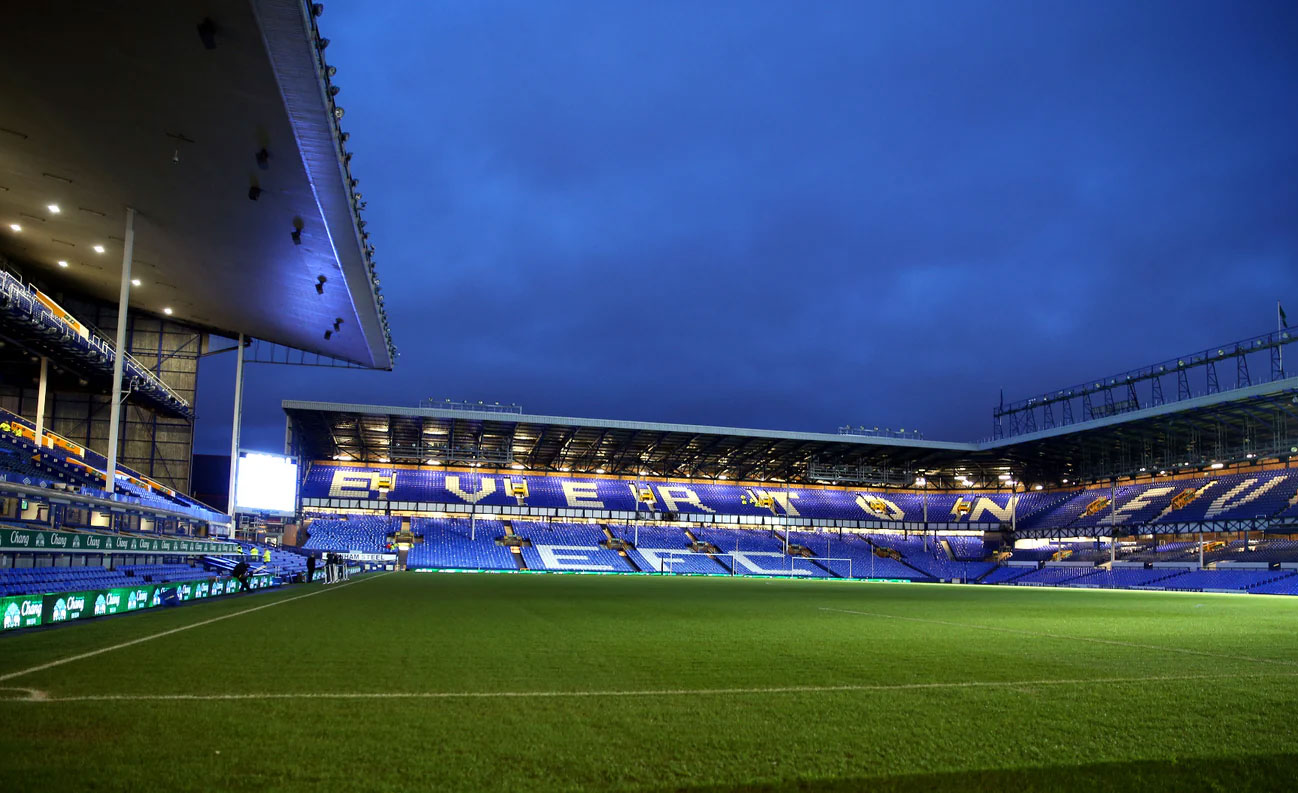
When it came to Goodison Park’s emotional farewell, the gods conspired against this particular Evertonian. The date of the last ever game at the Grand Old Lady coincided exactly with my daughter’s graduation from university so I was resigned to having to watch from afar as the Everton family said goodbye to the place that generations of Blues have called home since 1892.
Powerful footage beamed across the globe showed many fans moved to tears before, during and after the 2-0 win over Southampton, with the soulful singalong to the La’s’ There She Goes, and two separate renditions of Z-Cars — one on a the violin, the other on the trumpet — especially tugging at the heart strings.
Nothing could replace actually being there in L4, of course, but Everton’s Access Goodison video feature came as close as you could and it was those sweeping shots of the pitch and the four stands combined with intimate close-ups of supporters and fans-eye views from the deepest recesses of the seating areas that gave the me the psychological closure I was seeking having not been able to make the trip over in person… and knowing that I will never get to see my beloved Toffees play on that hallowed turf again.
I’ve struggled to find the words that can do justice to what Goodison means to us Blues and that’s as much to do with the sheer depth of her history as it is to the countless ways that that question could be answered by individual fans. For season ticket holders and match-goers, the Old Lady has been the centrepiece of a ritual — a place to share experiences, elation and heartbreak down the years with family, friends and, often, people whose names you never came to know. For others — those who have either never set foot inside her or for whom life has taken them far from Merseyside — Goodison was a shrine; the endpoint of a pilgrimage; the Mecca to immerse your soul in what makes this wonderful football club so special.
Above all else, Goodison Park was home and her ageing pillars, bricks, mortar and foundations have reverberated and shaken through decades of history that very few clubs can match. And through the lean and the hard times, too long-lived, visceral and recent for comfort, she has been the wellspring of passion and defiance that has kept this grand old institution in the top flight of English football where other clubs might have fallen. (Indeed, some have done so.)
Though we Toffees have always been keenly aware and fiercely proud of Goodison’s history, the past week has been a chance to convey it to the wider footballing populace. The first purpose-built football stadium in the world; the first to feature double-decker stands on all four sides of the ground (including the Bullens Road stand, the oldest of its kind still standing); the first to have a triple-decker cantilever stand (the Main Stand, completed in 1971); the first to have floodlights and dugouts; the first to have undersoil heating.
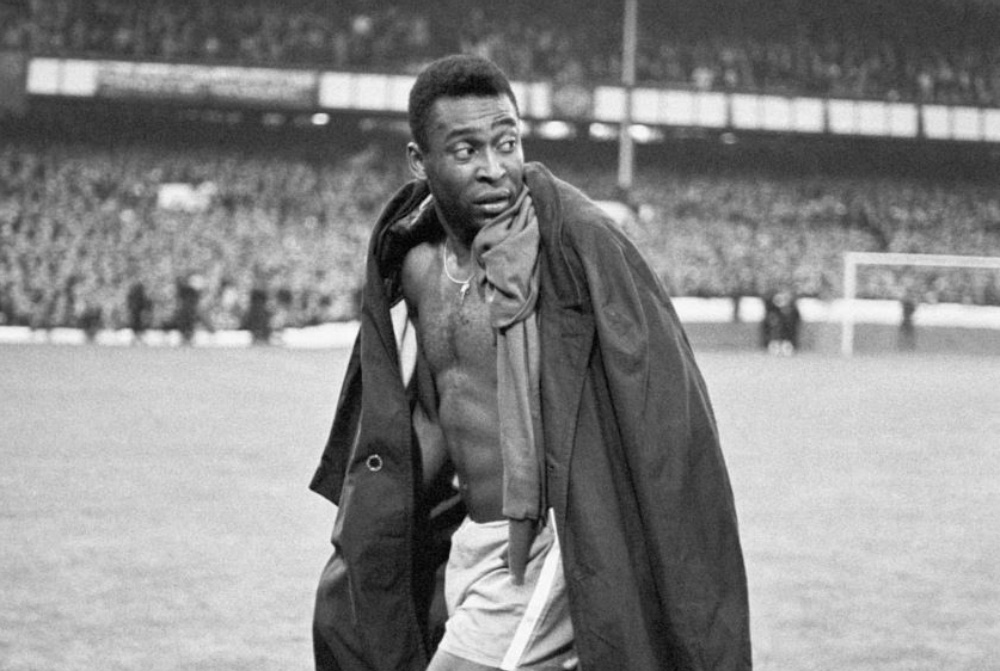
For the first century of her existence, Goodison Park remained one of the best-equipped stadia in the country. She hosted England international fixtures, FA Cup Finals, royalty in the form of King George V and Queen Mary in 1913 and George VI and Queen Elizabeth in 1938, a baseball match between the New York Giants and the Chicago White Sox, and, of course, a World Cup semi-final (having hosted more matches during the 1966 Finals than any other club ground). Pele and Eusebio are counted among the greats to have played there and both counted Goodison as one of their favourite grounds.
And, it goes without saying that throughout her almost 133 years, the Old Lady has also played host to a galaxy of Everton stars that were also among the best to have ever played the game — from Edgar Chadwick, William “Dixie” Dean and Tommy Lawton to Alex Young, Roy Vernon, the Holy Trinity of Kendall, Harvey and Ball all the way through the magnificent team of the 1980s and into the 21st Century. Dean, of course, died at Goodison and his ashes were scattered by his family inside the centre-circle.
Though Everton’s star has fallen since that last title win in 1987 and the brief uplift of the FA Cup triumph in 1995 and the Club’s trophy drought has now lasted 30 years, the Toffees remain the fourth-most successful clubs in England and, as teams that could legitimately be regarded as smaller on the historical landscape of the English soccer have spent this season breaking the stranglehold that the old “Sky Four” have had on silverware in the Premier League era, there is surely no bigger sleeping giant or a club more poised to recapture its former status.
Thanks to the resources of the Blues’ new owners, The Friedkin Group, the shambolic years of naïve largesse and consequent austerity are hopefully behind us and with the move the waterfront in August, Everton can begin to awaken from three decades of slumber.
Sadly, it will mean leaving our beloved Goodison home behind where the Old Lady will become the cradle of dreams for the Women’s team, which is fitting given that the ground set an attendance record in 1920 that stood for 93 years when Dick, Kerr Ladies played St Helens Ladies in front of a crowd of 53,000. From its top level, English football will lose a part of its soul (as, in truth, will Everton) and perhaps the last of the country’s great old grounds. Those of a similar age that remain (but which, in any case, never achieved her grandeur) have had their classic character redeveloped and modernised out of them. Goodison has kept that idiosyncratic and anachronistic charm to the end.
Inevitably, the face and character of the iconic old stadium will change and, over time, she will become less recognisable; ’twas ever thus, as those who fondly remember the gabled centrepiece that adorned the old Main Stand, the hemispheres behind the goals or the Littlewoods clocks or even the old terracing know all too well. Such is the need for and nature of change.
From the unique edifice of St Luke’s Church that stands in the corner between the Gwladys Street and Main Stand and the unmistakable Archibald Leitch lattice-work to the clack of the wooden seats and obstructed and "letterbox" views, memories of dear old Goodison will remain in the hearts of all of us.
In so many ways she was Everton but the true spirit of the Blues lies with the fans. They made it the celebrated bear pit and feared cauldron it could so often be. Goodison’s power was more a product of its people than the other way around and that is what we need to bear in mind as we begin a new volume of this Grand Old Team’s storied history.
I didn't get to join the rest of the True Blue family in saying goodbye to Goodison on Sunday with a perfectly-observed and deeply moving celebration of the Old Lady's life. But I do have a lifetime of memories from watching our beloved team there that I will always carry with me. With the exception of the Park End, I've sat in almost every part of the stadium, including the directors' box. I've craned my neck around steel girders and stooped under overhanging beams to peer through that infamous letterbox.

I've watched derby wins and last-ditch escapes from relegation and borne witness to the 1987 title-winning side and the brilliance of Steven, Southall, Ratcliffe, Sheedy et al. I've navigated her labyrinthian corridors on a match day and drank in the directors lounge, walked that unmistakable narrow tunnel and stood by the famous pitch. I've also danced in the rain on that hallowed turf with thousands of other Blue brethren and sistren after one of those relegation escapes and made friends for life among them.
That I have seen my last match there hasn't really sunk in yet and probably won't until I'm standing on the steep rake of the stands inside the new Blue bastion at Bramley-Moore Dock. But I'll never forget Goodison Park, the Grand Old Lady of English football and for so long the beacon of Everton's pioneering position in the game.
Reader Responses
Selected thoughts from readers22/05/2025 09:57:38
You didn’t miss it, Lyndon. Everyone who has ever been there was present on Sunday, we could feel it.
22/05/2025 15:37:08
Came across this on Youtube. Whether you like the Premier League, or think it's the bane of English football, I thought this was a really nice video and well done by the EPL.
I never got to Goodison. Don't know if I ever will. I am very happy the women will be playing there and I will 100% attend a woman's game if I'm ever over, just to see Goodison. Despite being one of those "distance, adopted fans", watching this video brought back so many memories. I smiled through the entire watch.
23/05/2025 08:17:57
Written with your customary elegance, Lyndon, thank you.
I’ve been reflecting on events this week, and I don’t recall anything like the same degree of interest from the media and the wider football world when grounds such as Highbury, White Hart Lane, Roker Park and Maine Road closed for the last time. Call me biased but I can’t help wondering if there’s a belated recognition there of the particular special status of Everton and Goodison within the game?
On walking up to the ground, I happened to overhear a young lad tell his mate it was a strange feeling - he was managing to feel both elated and depressed at the same time. With Goodison and BMD in mind, I think I recognise that emotion myself.
23/05/2025 09:13:14
PS, Eusebio fair enough, but I’d be mightily surprised if Goodison really was one of Pele’s favourite grounds. He had seven shades kicked out of him on it!
23/05/2025 10:34:03
Beautiful writing Lyndon. My first Goodison game was Everton v Manchester United 2nd December 1961. The result Everton 5 Manchester United 1. I was, 2 and carried in by my dad and I have absolutely no memory of the occasion whatsoever. My dad said he thought he'd spawned a little Manc as after the first Everton goal I did nothing but cry to be home.
The first match I remember distinctly was being taken to another Everton v Manchester United clash on a balmy Saturday in August 1967 -we won 3-1 with goals from Alan Ball (2) and Alex Young. This was the day the Everton bug bit me and I was mesmerised by the intricate passing of the Everton side. Manchester United had Best, Charlton, Law and a young tyro called Brian Kidd playing for them and I remember the talk on the 'chara' from BICC club being about how good they were. We made them look ordinary as Alan Ball ran rings around them and Young floated around the pitch like he was wearing ballet shoes. I can remember the roar of the Goodison crowd (60.000) and my dad having to keep hold of me as I sat on a crash barrier.
The singing on the 'chara' on the way home with some words I didn't understand and didn't realise were naughty until I repeated one of the songs in front of my mum whilst playing with my toy soldiers which led to a clip around the ear and a stifled laugh from my grandad as he hid behind his newspaper.
I had been taken to other matches between 61 and 67 - but that's the one I remember and that's the day 'Evertonian' became an integral part of my identity.
Add Your Thoughts
Only registered users of Evertonia can participate in discussions.
Or Join as Evertonia Member — it takes just a few minutes and will allow you to post your thoughts on artices across the site.
5 Comments ↓