

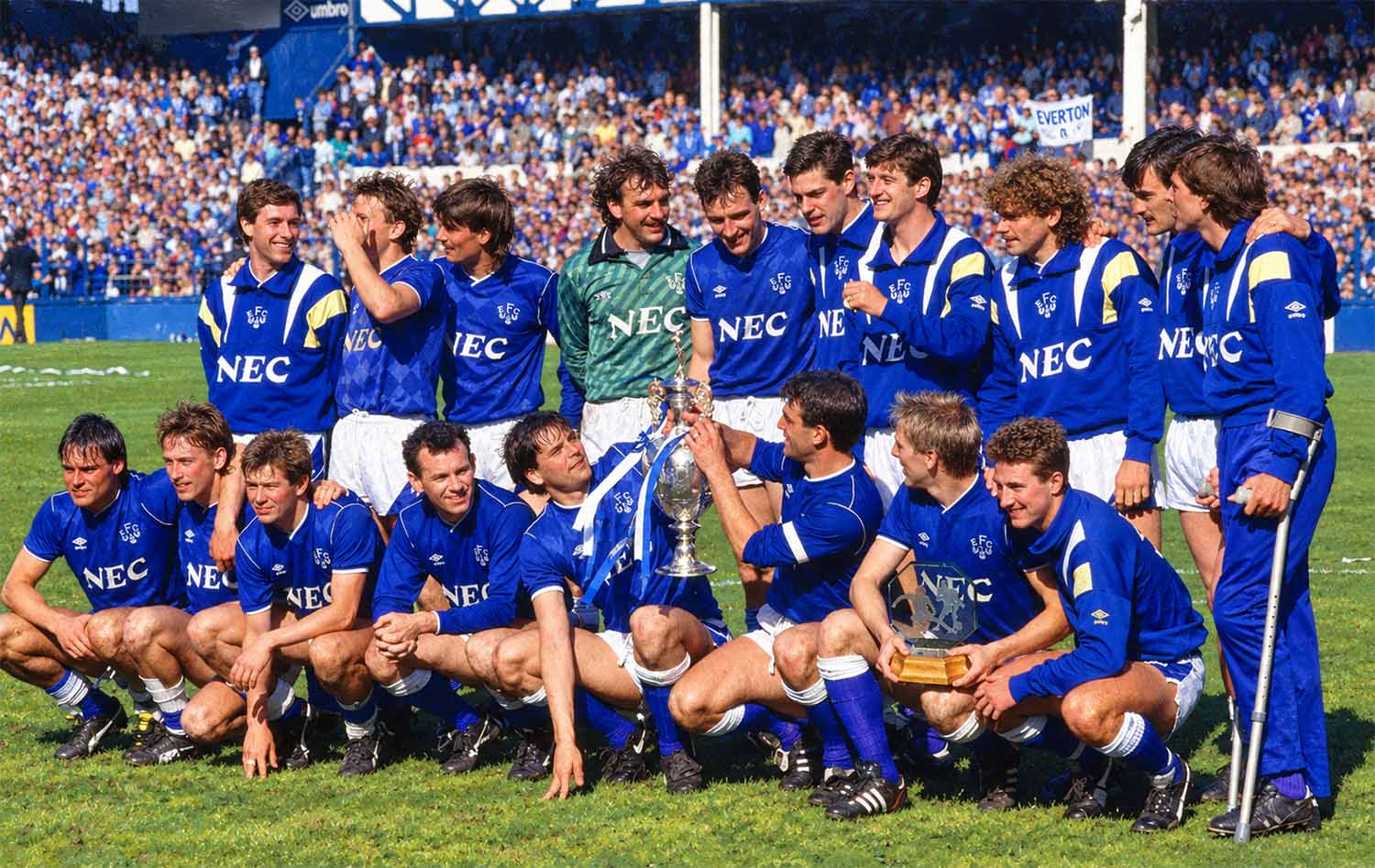
Historic But Unheralded — Everton's “Forgotten” 1987 Champions
As Paul McParlan explored in his 2021 book, Everton’s glorious 1986/87 campaign, one of Howard Kendall's most impressive achievements, has gone curiously uncelebrated by history
The notion that Everton could go 40 years without winning another league championship was inconceivable to Evertonians in the mid to late 1980s. The club had averaged close to a title every decade over the course of its history and by 1987, only Liverpool had won the old Division One more times than the Toffees, with the vast majority of the Reds’ triumphs coming in the preceding two decades.
Whilst it was concentrated into four short years, Everton were coming off the most successful period in their history and it felt as though the club was primed for the kind of dynastic hegemony that their neighbours had enjoyed since the mid-1960s. Or, at the very least, that Merseyside would dominate domestic football for years to come.
Of course, as we know all too painfully well, the 1986/87 season was the last time Everton were crowned champions of England and the seeds of the Blues’ decline had already been sown with the decision by UEFA, with the acquiescence of the UK Government, to ban all English clubs from European competition for five years in 1985.
Already denied the opportunity to defend the European Cup Winners’ Cup trophy or enter the 1985/86 European Cup as clear favourites, the team that Howard Kendall rebuilt would be barred from the latter tournament for a second time, depriving Everton of the chance to follow the likes of Manchester United, Nottingham Forest, Aston Villa into the history books concerning Continental football’s biggest prize.
Nevertheless, the 1986/87 title triumph should be remembered for the magnificent achievement it was. Sadly, as Paul McParlan explored in his 2021 book, The Forgotten Champions, Everton’s glorious campaign that season has gone curiously uncelebrated by history, not only by the country at large but by Evertonians themselves as well.
Perhaps because it ended the Blues’ 15-year wait for the championship, broke Liverpool’s stranglehold on the domestic title, and was the central pillar of what was tilt at a treble that year, 1985 garnered most of the attention. It didn’t help that contactual disputes by the broadcasters meant that very little of the 86/87 campaign was televised and that the clincher at Norwich City merited barely a minute and a half worth of coverage on the evening news that April evening.
Disappointingly, however, 1987 was left almost as a footnote to Rob Sloan’s otherwise brilliant documentary, Howard’s Way with the lion’s share of the focus and reminiscence given to the achievements of 1984 and 1985.
A year on from the elation of 1985 that had been tempered only by agonising defeat to Manchester United in the FA Cup Final, Evertonians found themselves at a low ebb in May 1986. Crippling away defeats at Luton Town in March and then, famously, at Oxford with four matches to go meant that Everton had to begrudgingly hand the title back to Liverpool.
Five days on from the end of the 1985/86 season, the Toffees let slip a 1–0 lead in the FA Cup Final, eventually going down 3–1 to the enemy from across Stanley Park. What could — and probably should — have been a second successive championship and the first league and cup double in the club’s history ended up slipping through their fingers.
Gary Lineker, the top scorer in Division One with 30 goals, was sold to Barcelona for £2.8m following his star turn for England in the Mexico World Cup and well-founded rumours had been swirling in the city that Howard Kendall had also come very close to leaving Everton for Camp Nou.
Howard ended up staying put but when he opted not to replace Lineker’s goals with a new centre-forward and with Neville Southall, Paul Bracewell, Gary Stevens, Pat van den Hauwe, Peter Reid and Derek Mountfield all sidelined by injury as the new season approached while Neil Pointon was still recovering from ruptured knee ligaments, the Blues’ prospects of wrestling the title back in 1986/87 appeared to have dimmed.
Kendall, however, had built a reputation as one of the most astute recruiters of players in the country and he moved to add three promising players from the lower divisions to bolster the numbers. Warren Aspinall and Kevin Langley arrived from Third Division Wigan Athletic while Neil Adams was acquired from Second Division Stoke City.
Howard’s masterstrokes, however, were two transfers for players at different ends of their careers, one of which paid marvellous short-term dividends while the other would go on to become the third-highest appearance maker for the club.
In a move that perhaps surprised the player as much as the fans at the time, Manchester City veteran, Paul Power, was drafted in at the age of 33 to add experience and versatility. And just before the start of the season, Norwich City were persuaded to part with their Milk Cup-winning skipper, Dave Watson, for £900,000.
Over the course of the league season, Kendall would call on the services of 23 players in all and each played their part in securing Everton’s ninth championship. Langley made a promising start, including a memorable assist for Adrian Heath’s Gary-esque diving header in a televised 3–1 win over United at Goodison Park but he, like Aspinall ultimately found the step up to the top tier a challenge.
Adams and Pointon managed 20 starts between them and youth product Ian Marshall made two appearances off the bench, scoring once early in the campaign at Coventry in a 1–1 draw. But it was the virtual ever-present Power who was the revelation of the season. A model of consistency, he played 52 times in all competitions and emerged by the end as the player of 1986/87 while Watson, having taken some time to find his feet, had displaced one of the heroes of 1984/85, Derek Mountfield, in the heart of defence alongside Kevin Ratcliffe.
Kendall’s Everton made an unbeaten start to their Today League campaign, winning four of their first seven matches and following their first defeat, a 2-0 reverse to Tottenham Hotspur at White Hart Lane, were in amongst a leading pack that would play “ducks and drakes” for much of the first half of the season as they jostled for position at the top of the table.
However, between late-September and mid-December, the Toffeemen only win five of 12. Yet it’s enough to have them sitting in second place behind leaders Arsenal by the time they travel to Luton and the Hatters’ dreaded plastic pitch which, true to form, plays nemesis to Everton once more as future Evertonian, Mike Newell, grabbed a late winner.
If there were two spells during the 86/87 campaign that under-pinned Everton’s triumphant title tilt, the first spanned the Festive season when Kendall’s men had been bolstered by the return of Stevens at right back, a settled Watson (who had taken a while to find his feet at his new club), and the flying form of Adrian Heath who had many a fan asking “Gary who?” in relation the sale of Lineker a few months previously.
The Blues won seven of eight league games, including a rare win on another much-reviled artificial surface at QPR’s Loftus Road. Progress was made in the FA Cup where a Sharp brace saw off Sheffield Wednesday in the Third Round and the only blemish on the Toffees’ record between 20th December and 25th January, when they lost at fellow title-chasers, Nottingham Forest, was another cup defeat to Liverpool in the Quarter-Finals of the League Cup.
They had lost to the Reds over two legs in the Screen Sport Super Cup earlier in the campaign and further cup exits were to come in the Full Members Cup, where Charlton vanquished them on penalties, and eventual winners Wimbledon dumped Everton out of the FA Cup at the Fifth Round stage.
By 10th March, following the Toffees’ 2–1 defeat at Watford, Liverpool were six points clear at the top of Division One. Eight days later, the gap had stretched to nine. Everton had played two games fewer; nevertheless, at this stage the season had a sickeningly familiar air about it.
However, Kendall, who had already added yet more versatility in the form of Ian Snodin from Doncaster Rovers, would make one last foray into the transfer market before the transfer deadline with the acquisition of striker Wayne Clarke from Birmingham City to cover Sharp’s absence and address some of the shortcomings in Paul Wilkinson’s game. Wilkinson had been prolific in the Milk Cup but managed only three goals in 22 appearances in the League.
Coming from the Second Division, Clarke, the younger brother of noted Leeds forward Allan, was a largely unknown quantity who, as McParlan notes in his book, “exhibited a languid demeanour and a notable lack of pace,” but he was “an extremely gifted footballer” who ingratiated him to the Everton faithful in the best way possible with his first goal for the club.
Latching onto a poor kick forward by Arsenal’s John Lukic in an important clash at Highbury in late March, Clarke effected a sumptuous lob of the goalkeeper from 40 yards out. It was the only goal in a tightly-contested match, the third successive Everton victory on a run of what would be seven wins on the bounce.
By 20th April, Easter Monday, they’re now top of the league by six points with a game in hand on Liverpool and have the chance to wrap up the title with victory over the Reds five days later. Having won their first championship at Anfield in 1891, nothing could have been sweeter for Everton than claiming a ninth crown on their old stomping ground but the Merseyside derby, the sixth of the season, would frustrate them once again.
The Goodison Park edition had ended goalless on a frigid night in November 1986 and the second league meeting would end with Kenny Dalglish’s team running out 3–1 victors. With the Charity Shield having been shared the previous August and Liverpool winning all three cup meetings between the two teams over the season, it meant that Kendall would fail to best Dalglish at all in 1986/87. But he would have the last laugh.
Everton’s title celebrations were put on hold when they couldn’t find a way past relegation-threatened Manchester City at Goodison which meant that Pat van den Hauwe’s famous third-minute strike at Carrow Road, the only goal in a victory over Norwich City, was the goal that clinched it.
At the final reckoning, Everton, who had missed out on the title by two painful points in May 1986, ended up winning the 1987 Today League championship at a canter by a margin of nine points.
Along the way, having taken the bold decision not to replace 40-goal Lineker with a new striker in the summer of 1986, Howard Kendall somehow fashioned a team capable of challenging for the top honours and eventually finishing well clear of Liverpool despite having to do without some of the biggest stars of the 1985 team.
Southall missed the first few weeks of the season; Bracewell was absent for the entire campaign; Stevens only returned to action in December; Reid played just 16 times in the league; and both Sharp and Sheedy missed matches at a crucial point in the season.
Thanks to some savvy transfers and a reliance on the team sharing the goals around, just as they had done two seasons earlier, Kendall found the magic formula. Sharp would score just five times in the league but Heath would come to the fore by bagging 11; Sheedy scored 13 times and wing wizard Trevor Steven, thanks largely to his prowess on penalties, finished the campaign as top scorer with 14.
The manager rightfully won the Manager of the Year award but the entire 1986/87 Everton team was overlooked when it came to the footballer of year awards. That was in keeping with a general indifference from the national media towards what Kendall and his men had achieved against some stiff odds.
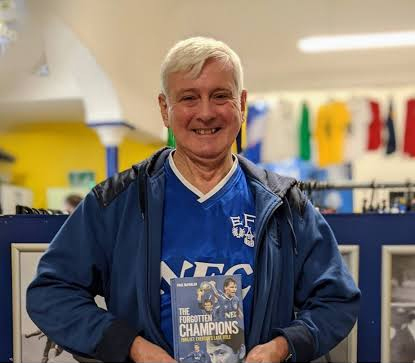
Paul McParlan, author of The Forgotten Champions
As McParlan observes, The Daily Telegraph book The Complete History of British Football has six pages summarising the season but, incredibly, fails to make a single mention of who won the title that year. The account of 1986/87 in The Illustrated History of Football from the Sunday Times described the title race as being akin to a game of “pass the parcel” and focused more, in Paul’s words, “on teams such as Arsenal and Nottingham Forest than on the actual champions themselves”.
Even some of Everton’s players, writing in their respective autobiographies in the years and decades since, seem to gloss over or minimise the glory of the 1987 triumph.
David Lacey in The Guardian was, perhaps, the most notable journalist at the time who insisted on giving the Blues their due: “Kendall and his chief coach, Colin Harvey, have again shown that the art of good management is just that – making do and mending when the team are hit by injuries, filling the gaps with players who can do the jobs, buying the sort of spare parts that fit easily into the system and, above all, maintaining a high level of performance.”
It’s hard to think of a better summation of Kendall’s last great managerial achievement before he departed for Athletic Bilbao in the summer of 1987, a move that began the gradual break-up of the 1987 title-winning team and the beginning of Everton’s gradual disappearance from English football’s top table.
Listen to the Podcast
Paul McParlan joined Lyndon to discuss his book and the 1986/897 title-winning season on the Evertonia Podcast. You can listen to their chat below. You can also buy The Forgotten Champions in major book shops or online at Pitch Publishing or Amazon.co.uk
Reader Responses
Selected thoughts from readersAdd Your Thoughts
Only registered users of Evertonia can participate in discussions.
Or Join as Evertonia Member — it takes just a few minutes and will allow you to post your thoughts on artices across the site.
22/10/2026 08:49:28
I fully agree with all you've written Lyndon. We've never been the media darlings have we ? Paul Power and Adrian Heath were wonderful that season. Howard Kendall genius. I was at my parents caravan in Wales, when Pat scored at Norwich. I can remember the moment as though it was yesterday. To think it will be 40 years ago, come May next year, is unbelievable. Those were the days.