


The “Commercial Suicide” Myth — Manchester City Are Not Too Big to Nail
The repercussions for City have to be proportionate to the seriousness and extent of their crimes. To act otherwise would be to compromise the very integrity of the Premier League.
As the dust begins to settle following the explosive finding of guilt of Manchester City on their historic charges of rule-breaking and obstruction, we’re now in the phase of the reportage of the scandal where the narrative is being driven more from the Etihad Stadium.
Alongside analyses of the many ways in which Abu Dhabi United Group (ADUG) might succeed in reversing the Premier League-appointed Independent Commission’s verdict against City, alarmist headlines resurrecting the spectre of a European Super League or warning of the dangers to the League, from a commercial point of view, of losing its most successful member of the past decade have also started to emerge.
It’s true, of course, that over the past 17 years, Manchester City have, in record time, established themselves as one of the biggest clubs, not only in England and Europe beyond but also the world. Their commercial revenues or worldwide fanbase might not quite stack up with those of a Real Madrid but their spending power and footballing prowess certainly now do.
For years, rival clubs in England asked how that was possible. The Premier League, thanks in huge measure to Rui Pinto, Der Spiegel, and the “Football Leaks” episode on the one hand and the determination by Richard Masters and Alison Brittain to see their investigation through on the other, they now have a definitive answer... even if ADUG appear hell-bent on pursuing their scorched earth policy to a very bitter and far-off end.
The idea that the League should somehow lose their nerve at this critical juncture and recommend leniency to the sanctions panel out of fear of the damage having City either relegated from or expelled entirely from the top flight might cause when it comes to the next television rights negotiations goes against the fundamental need for justice and consequences for wrongdoing.
The Independent Commission into City’s reported 115 charges has found the club and its Emirati owners to have perverted over a decade of Premier League history through industrial-scale fraud and built on the back of it a club that has qualified for the Champions League ever year since 2012 and become a financial powerhouse in the game with very few equals.
They have brought the game into disrepute on a biblical level. Our national game, our league, one that for all its increasing inequity and depressingly uncompetitive landscape was, until now, largely free of the kinds of scandals that rocked Serie A with Juventus two decades ago and from which many Italian commentators say they haven’t recovered.
To repeat some of the arguments made here a few days ago, the repercussions have to be proportionate to seriousness and extent of the crimes. To act otherwise would be to compromise, for short-term gain, the image and integrity of a league that was thriving before Abu Dhabi arrived on the scene and will do so long after they’re gone, provided the Premier League is seen to be putting its house in order and upholding the rules to which the other 19 clubs in a given season are adhering.
(It goes without saying, of course, that Everton, in particular, will have been let down in egregious fashion should City receive a more lenient punishment than the Blues simply because of the former’s standing in the game and commercial draw.)
Indeed, it would surely be more damaging to the Premier League’s standing and appeal if City are seen to be getting away with cheating than it would be to keep them in the division out of some misguided notion that the product is worth more with them in it.
The fact is that in terms of the big draw of the title race, only half of the so-called “Big Six” have been in the conversation in recent years and that hasn’t affected the Premier Leaguer’s global appeal. Instead of going through what would historically have been a cycle of rebuilding from relegation to the second tier, Chelsea and Manchester United have churned through myriad managers and hundreds of millions of pounds in transfer expenditure to largely stand still.
Tottenham Hotspur’s value to the story has, their Europa League triumph aside, been a chaotic transition away from the Daniel Levy era and had Everton done their job in May, they’d have gone down and the Premier League would have moved on without them.
The same would be true for City who, depending on how far down the pyramid they are thrown, would become a soap opera to rival Wrexham’s televisual appeal, thereby broadening interest in English football beyond the confines of the top flight.
As for the notion of a breakaway Super League, we’re halfway there. The conditions already exist for the big six to establish a lock on the Champions League places and three of them — City, Arsenal and Liverpool — are virtually guaranteed a ticket to Europe’s gravy train every season; Manchester United and Chelsea, with their ability to outspend the other 14, should be among them.
It has got to the point where the rest of football feels like the top of the Premier League is a closed shop and that the only way to fix it is to radically reform the spending rules. Failing that, perhaps the nuclear option of those clubs jumping ship to a bigger, more sterile closed league of their own doesn’t feel quite as awful as it did five years ago.
That would be devastating, though, and, from the perspective of 138 years of history of the world’s oldest and most prestigious football league, utterly heartbreaking. As hard as it is to escape the feeling that the whole thing has been dying a slow death anyway since the onset of the Premier League in 1992, faith that a way to redress the balance through regulatory means has to remain.
Where City are concerned, there’s an argument to be made that regardless of whether or not their owners are able to wriggle out of the Independent Commission’s guilty verdict on another legal technicality, their conduct to this point should be enough for the other 19 clubs to get around a table and vote to kick them out. The costs of litigating the case to this point has cost each club millions and if ADUG are prepared to drag this through the High Court for the next five years, the bill is only going to get bigger.
It is, of course, unlikely that the other clubs would take that step which potentially leaves the world’s most-watched league staring at an interminable period of uncertainty and limbo. That only intensifies the urge to see City dealt with in the harshest way possible and the belief that we wouldn’t really miss them if they were nailed for the crimes of which they’ve been found guilty. On the contrary, keeping them around would be like an open, permanently festering wound.
It’s harsh on City fans, especially those who pre-date their club’s recent rise, but the powers-that-be have had no regard in recent years for those of Bury, Sheffield Wednesday or Leicester, as examples. The need for justice to be sternly and unflinchingly applied is paramount for the long-term health and integrity of the game.
-
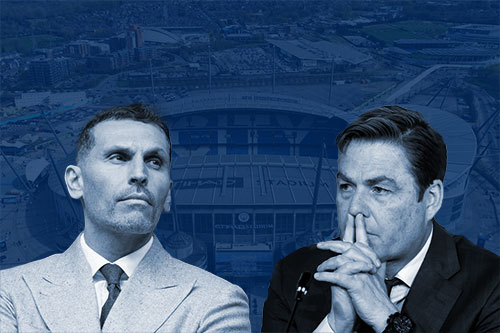
Of Power and Influence
Manchester City had enormous influence over the Premier League and other clubs. Along with three or four others they have held sway in the room. If found guilty, the punishments should be harsh but the Premier League bear a measure of responsibility as well. -
City Scandal Should Be a Watershed Moment for European Football
If found conclusively guilty, Manchester City need to be summarily dealt with and serious measures be put in place to preserve the health and future of the Beautiful Game -
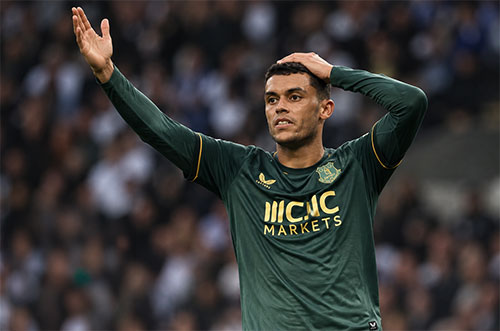
Frustrating Everton let toothless Spurs off the hook
Once it became clear that Spurs were going to have another of those days, this game really felt there for the taking for Everton but they just lacked conviction when it really mattered
Reader Responses
Selected thoughts from readers04/10/2026 21:08:47
I agree the breaches must be addressed, regardless of City's commercial importance. But City's Abu Dhabi ownership links mean the consequences of a severe sanction could extend beyond football into wider UK–UAE economic interests.
That doesn't justify leniency,but it is a factor worth acknowledging.
04/10/2026 21:19:03
I agree, Jerome, but it's all bluster and intimidation tactics. Abu Dhabi's investment in the UK hasn't been charity; they've benefited hugely in financial terms, of course, but also in terms of PR, hence all the "sportswashing" allegations.
We can't allow them to effectively say, "allow us to cheat or we're taking our ball home".
04/10/2026 21:35:00
There’s a really good article in today’s Guardian by Jonathan Wilson. His analogy of winning trophies by default is spot on, who wants an FA cup win or Premier league 10 years after the spontaneity of being there and celebrating with the people around you at the point of winning? not any proper fan.
Leave blanks as the winners of those stolen trophies for all future generations to see and question why didn’t anyone win the 2012 FA cup or the 2014 Premier League, and many more.
04/10/2026 22:20:34
Mentioned on another thread but my punishment would be 40 points per season for 5 years,( similar points deduction as us pro rata for similar breaches)that way they won’t qualify for Europe and may well get relegated, points loss is frozen if relegated, then kicks in again if promoted to PL, players leave and others won’t sign, proper long term punishment.
I also think pressure will be on in January when Everton v Burnley kicks off again in court, the EPL will not want Burnley winning that one.
04/10/2026 22:55:28
great article lyndon, you have summed up exactly why man.cheaty cannot escape a proper and fitting punishment, maybe you should e mail it to mr masters ?
pete @1 what evidence do we have that tfg want to put money in - its not like dan the man and angus are always communicating with us and informing evertonians of their future plans and targets for efc.
04/10/2026 23:09:20
Lyndon I see where you are coming from.I think City are going to pay and there will be plenty of fallout. They are going to try every trick in the book to put pressure on to get parts of the allegations reversed, but their arguments have already failed.Actually Everton had a better arguement for their one breach.
Add Your Thoughts
Only registered users of Evertonia can participate in discussions.
Or Join as Evertonia Member — it takes just a few minutes and will allow you to post your thoughts on artices across the site.
04/10/2026 20:37:10
There is, has been, a clear financial divide between the so called big six and the rest of the premier league. Why has this become a divide that grows every season. It is plain and simple, the big six earn more and can spend more under the rules. Each year they get richer because they win more, they achieve more, they earn more. They then spend on the biggest name players and the revenues grow.
The rest of the clubs haven’t a chance to compete because spending rules restrict them so much so each year they get relatively poorer. Accepted there are the anomalies that crop up now and again but it’s usually short lived. they have one or two exceptional players and the big six move in like vultures with huge cash incentives for those players to jump ship.
If you want a PL that gives all clubs a fair crack of the whip those clubs have to be able to keep their best players and build teams around them.
What needs to happen is a formula that allows the smaller clubs to spend more, if they have it, and the bigger clubs to be more restricted with their spending. Of course they will complain but the PL should stand strong and impose themselves.
Everton for example, Nottingham forest another, have big money owners who want to put money in but can’t because of financial restraints, not without creative accounting as displayed by Chelsea and Man City.
The PL needs to find a way of allowing the lower clubs to spend more while limiting the bigger clubs… F1 motor racing has achieved it. Why can’t the PL.